Your lifts are moving up, but the mirror looks the same. That can make training feel confusing: if the weight on the bar is increasing, should your muscles not be visibly bigger too?
 Product optionEFX Kre-Alkalyn Creatine CapsulesCreatine capsules in a convenient format.Affiliate link · Price and availability may change.Check on Amazon As an Amazon Associate I earn from qualifying purchases.
Strength and muscle size are connected, but they are not identical. You can become better at a movement through improved technique, coordination and confidence before adding enough tissue to notice. You may also be progressing the exercise in a way that shifts work away from the muscle you want to grow.
I would not treat improved strength as bad news. It is evidence that something is adapting. The next job is checking whether your training, nutrition and time scale are suitable for hypertrophy.
Why are you getting stronger but not bigger?
You can get stronger without looking bigger because strength also improves through skill, coordination and nervous-system adaptations. Visible muscle growth may be limited by low training volume, sets that are too easy, inconsistent technique, insufficient calories or protein, poor recovery, or simply not enough time. Track measurements and photographs as well as gym performance.
Beginners often add weight quickly because they learn the lift. The body becomes better at recruiting muscle and keeping the movement stable. That improvement can happen faster than a noticeable change in arm, chest or leg size.
Strength is a skill as well as a physical quality
Think about your first weeks on a machine. You may have felt shaky, used an inconsistent seat position and stopped sets early because the effort was unfamiliar. After practice, the movement becomes smooth and you can use more weight.
Some of that gain comes from better coordination rather than bigger muscle. You learn the strongest setup, brace more effectively and produce force in the right direction.
This is especially relevant to low-repetition compound lifts. Practising a squat, bench press or deadlift frequently can improve the test itself. That is valuable, but the result does not tell you exactly how much each individual muscle has grown.
You may not have trained long enough to see it
Visible change is slow. Lighting, posture, hydration, glycogen and your starting body-fat level all affect what you see in the mirror. Looking every day makes gradual change difficult to notice.
I recommend comparing photographs every four weeks under the same lighting, distance and pose. Take body measurements consistently and review several months of training.
If you have trained properly for six weeks, you may be progressing without a dramatic transformation. If you have trained for a year with no measurement or visual change, a deeper review is reasonable.
Your training volume may be too low
One hard set can stimulate muscle, but it may not provide enough weekly work for your best growth. Research generally supports a dose-response relationship between weekly resistance-training volume and hypertrophy, while also showing that more is not endlessly better.
I often start around six to ten challenging sets per major muscle group per week and adjust from there. Smaller muscles receive indirect work from compounds, so the exact number is not as simple as adding every exercise equally.
If chest growth is the goal and you complete only two pressing sets on Monday, increasing to two well-distributed sessions may help. If you already do twenty hard sets and performance is falling, more volume may make recovery worse.
Your sets may be too easy
A muscle needs meaningful tension. If you finish a set at 12 repetitions but could have completed another ten, the set is unlikely to be as productive as it could be.
Most of my clients perform working sets with roughly one to three controlled repetitions left. You do not need to reach absolute failure every time, but you should know what a genuinely hard set feels like.
Beginners often underestimate their reserve because discomfort feels like failure. Machines and stable isolation exercises can be useful for learning to work close to the limit safely.
You are progressing the weight but changing the exercise
Adding load only counts as useful progression when the movement remains comparable. If your curl becomes a hip swing, your squat becomes shallower and your row turns into a lower-back movement, the target muscle may not receive more tension.
Standardise the setup:
- Use the same seat and handle position.
- Keep a repeatable range of motion.
- Control the lowering phase.
- Avoid bouncing through the hardest point.
- Record clean repetitions, not any repetition that moves the weight.
Sometimes a slightly lighter load produces a much better stimulus because the target muscle stays under tension.
Your programme may be designed for strength
Very low repetitions, long rests and frequent practice of a few competition lifts can improve maximal strength efficiently. Muscle can still grow, but hypertrophy may not be the programme’s main priority.
For size, I like a mix of moderate and higher repetition work, multiple challenging sets and exercises that allow the target muscle to work through a comfortable range. Most sets can sit somewhere between roughly 5 and 20 repetitions, with the exact choice depending on the exercise.
A heavy press might suit 6–10 repetitions. A lateral raise may feel and perform better at 12–20. The muscle does not read a special number, but the exercise should be stable enough to approach failure safely.
You are not eating enough to support growth
If body weight has been falling for months, gaining muscle becomes harder, especially once you are trained. Beginners and people returning after a break may build muscle in a calorie deficit, but the opportunity is not unlimited.
When muscle gain is the main goal, I generally use maintenance calories or a small surplus depending on the person. A large “bulk” is unnecessary and can add fat faster than muscle.
Track average body weight, not one weigh-in. If weight, measurements and training are unchanged for months, a modest increase in food may be appropriate.
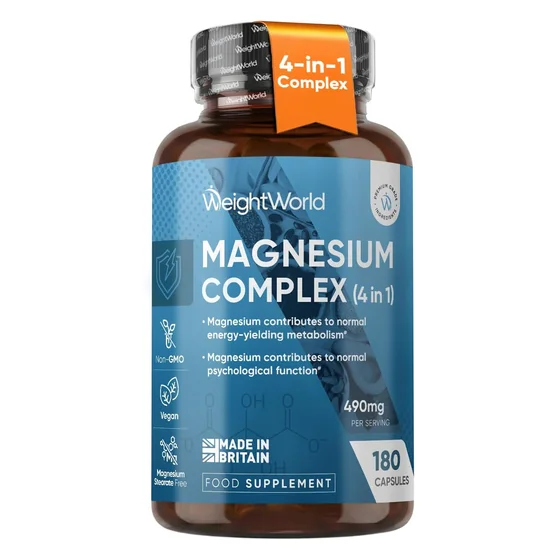 Product optionWeightWorld Magnesium Complex 4-in-1Magnesium capsules for a simple supplement routine.Affiliate link · Price and availability may change.Check on Amazon As an Amazon Associate I earn from qualifying purchases.
Protein may be inconsistent
Protein supplies the amino acids used to build and repair muscle. For many active adults, roughly 1.4–2.0 g per kilogram per day is a useful range, with individual circumstances affecting the target.
Do not rely on one giant evening serving while breakfast and lunch contain almost none. Spread useful portions across three or four meals. Meat, fish, eggs, dairy, soya, tofu, beans and suitable protein powders can all contribute.
Protein powder is optional. It helps when convenience is the barrier, not because it builds a different type of muscle.
Your recovery may be limiting productive work
Muscle does not grow because you feel destroyed. It grows when training creates a stimulus that you can recover from and repeat.
Poor sleep, high stress, aggressive dieting and too much additional training can reduce performance. If every session begins tired and your joints hurt, adding more sets is unlikely to solve the problem.
Review your weekly schedule. Two strong sessions with recovery can outperform four rushed sessions completed after short sleep.
The target muscle may not be the limiting factor
In a compound lift, another muscle, your grip or general breathlessness may end the set first. Your back may have more to give when your forearms fail on rows. Your quadriceps may not be close to their limit when balance ends a split squat.
Use straps where appropriate, choose a supported machine, adjust technique or add an isolation movement. The aim is not to avoid compounds; it is to make sure the muscle you want to grow receives enough direct work.
Your exercise choice may not suit your body
No exercise is compulsory for hypertrophy. Limb lengths, joint structure, mobility and injury history affect how movements feel. A barbell squat may be excellent for one person and an awkward lower-back challenge for another.
I choose exercises that are stable, pain-free, progressable and create tension in the intended area. A machine press is not inferior because it uses less stabilisation. That stability can help you train the target muscle harder.
Pain is not proof of growth. Sharp or worsening pain deserves assessment and a suitable modification.
You may have grown without noticing
Muscle gain can be hidden by body fat, loose clothing or poor comparison methods. A one-centimetre arm increase is difficult to see when you look at yourself daily.
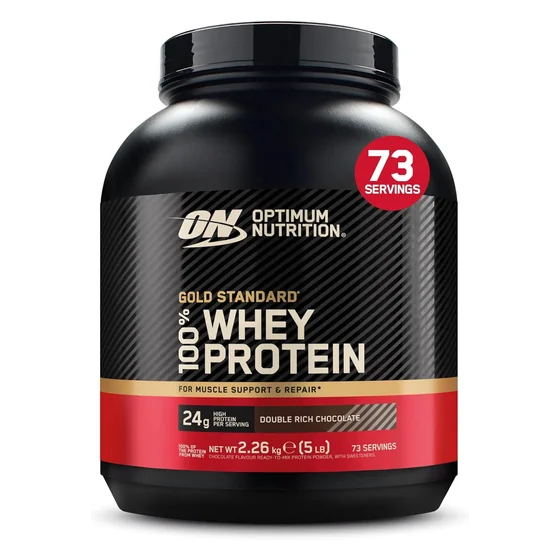 Product optionOptimum Nutrition Gold Standard WheyWhey protein powder for a convenient shake.Affiliate link · Price and availability may change.Check on Amazon As an Amazon Associate I earn from qualifying purchases.
Use three forms of evidence:
- Progress photographs under the same conditions
- Tape measurements at consistent landmarks
- A training log showing clean performance
Body-composition scales can be affected by hydration and should not be treated as precise muscle measurements. Use them only as one rough trend if you choose to use them at all.
How to adjust your programme for more muscle growth
Do not change everything at once. Pick one lagging area and audit its weekly work.
- Count the challenging sets that directly train it.
- Check whether those sets finish close enough to failure.
- Standardise range and technique.
- Train the muscle across two weekly sessions if practical.
- Add two sets per week if recovery is good and volume is low.
- Review after six to eight weeks.
If you add sets, place them where performance is strongest. Five rushed sets at the end of a long workout may be less useful than three focused sets earlier in the session.
Common mistakes I see
Chasing personal bests every workout
Maximal lifts test strength but do not necessarily provide enough productive volume. Most training should build capacity rather than constantly test it.
Copying an advanced bodybuilder’s volume
Your recovery, technique and schedule are different. Start with the amount that produces progress for you.
Changing exercises before progression appears
A new variation creates novelty but resets skill. Keep useful movements long enough to improve them.
Eating everything in the name of bulking
Rapid weight gain is not rapid muscle gain. Use a modest surplus and monitor your waist.
Judging growth from a workout pump
A pump is temporary. It can help you feel the muscle, but it is not proof of long-term hypertrophy.
What I would focus on first
I would keep the exercises that are clearly getting stronger with good form. Then I would check weekly volume, effort, food and measurements before replacing the programme.
For the next eight weeks:
- Use consistent exercise setups.
- Take most working sets within one to three repetitions of failure.
- Train each priority muscle twice weekly.
- Meet a realistic protein target.
- Sleep as consistently as your circumstances allow.
- Compare monthly photographs and measurements.
This gives you enough time to judge the process instead of reacting to one mirror check.
Frequently asked questions
Does getting stronger mean I am gaining muscle?
It can, particularly over longer periods with consistent technique. But strength also improves through skill and nervous-system adaptations, so it is not direct proof by itself.
How long does visible muscle growth take?
Most people need several months of consistent training to see clear change. Starting level, genetics, food, recovery and body fat all affect visibility.
Should I lift lighter weights for size?
Muscle can grow across a broad repetition range when sets are challenging. Choose loads that let you control the movement and approach failure safely.
How many sets should I do per muscle?
There is no universal amount. Around six to ten challenging weekly sets is a reasonable starting point for many people, then adjust using progress and recovery.
Do I need a calorie surplus?
Not always. Beginners and returning trainees may gain at maintenance or in a modest deficit. Trained people usually find growth easier with sufficient energy and sometimes a small surplus.
Why are my arms strong but still small?
Your compound lifts may improve through skill while direct biceps and triceps volume stays low. Check isolation work, technique, weekly sets, calories and the time you have trained.
Turn strength progress into visible progress
If you are getting stronger but not bigger, do not throw away the evidence that your training is working. Make sure the strength is produced with repeatable technique, enough challenging volume and food that supports your goal.
Your next step is to choose one muscle you want to grow and audit its last four weeks of training. Count the direct sets, check effort and compare your form. That usually reveals more than another random programme.
If you want a muscle-building plan designed around your training experience, recovery and available days, that is exactly what I help my SykerFlex coaching clients with.
Sources
- Folland and Williams: adaptations to strength training
- Weekly resistance-training volume and muscle hypertrophy
- International Society of Sports Nutrition: protein and exercise
Training coaching
Turn useful advice into your own programme.
I can structure your sessions around your experience, available equipment, schedule and progress.
About the author
Roland Balogh
I’m an Active IQ Level 3 Personal Trainer, qualified in nutrition for sport and exercise performance. I help people build strength, improve their nutrition and stay consistent—without extreme plans or living in the gym.- Level 3 Personal Trainer
- Sport & Exercise Nutrition
- Mental Health Awareness
Keep reading
Related articles