If two gym sessions are all you can consistently manage, you can still build muscle. You do not need to copy the schedule of someone who trains six days per week and organises their whole life around the gym.
 Product optionEFX Kre-Alkalyn Creatine CapsulesCreatine capsules in a convenient format.Affiliate link · Price and availability may change.Check on Amazon As an Amazon Associate I earn from qualifying purchases.
I would rather see you complete two purposeful full-body workouts every week than start an advanced split that falls apart whenever work gets busy. The programme needs enough challenging work for each major muscle group, exercises you can progress and recovery habits that support the training.
This guide explains exactly how I would set up two weekly sessions, what to prioritise and where people usually waste their limited time.
Can you build muscle training twice a week?
Yes, you can build muscle training twice a week if both sessions cover the main muscle groups and you gradually increase the challenge. A full-body plan is usually the most practical structure. Train hard with controlled technique, complete enough weekly sets, eat sufficient protein and give the programme several months rather than constantly replacing it.
Research suggests that training frequency itself is less important when total weekly training volume is matched. Two sessions simply give you a useful way to distribute that work while allowing several recovery days.
Why twice-weekly training can work
Muscle grows in response to repeated resistance-training stimulus, followed by recovery. A two-day programme can provide that stimulus to every major muscle group twice across the week. For a beginner, returning trainee or busy adult, that can be plenty to make measurable progress.
Two sessions also have a practical advantage: they are easier to protect in your diary. If you plan five days and miss two, the intended programme changes. If you plan two and complete both, you achieve 100 per cent of the structure.
The limitation is time within each session. You cannot do every exercise you have seen online. You need movements that cover a lot of muscle, then a small amount of targeted work for areas that need it.
Use a full-body structure
With only two sessions, I usually recommend full-body training rather than a chest day and a back day. A body-part split could leave a muscle untouched for an entire week if life causes one missed workout.
Each session should normally include these movement areas:
- A knee-dominant leg exercise
- A hip-dominant exercise
- A horizontal or angled press
- A row or vertical pull
- A shoulder movement
- One or two smaller-muscle exercises
- Direct core work where appropriate
You do not have to use the exact same movements in both sessions. I often use an A and B version so joints are not stressed identically and the programme covers different angles.
A realistic two-day muscle-building plan
Workout A
- Leg press or squat variation — 3 sets of 6–10
- Incline dumbbell or machine press — 3 sets of 6–10
- Lat pulldown or assisted pull-up — 3 sets of 8–12
- Romanian deadlift — 2–3 sets of 8–12
- Cable lateral raise — 2 sets of 12–20
- Cable curl — 2 sets of 10–15
- Triceps press-down — 2 sets of 10–15
Workout B
- Hack squat or split squat — 3 sets of 8–12
- Chest-supported row — 3 sets of 8–12
- Machine chest press — 3 sets of 8–12
- Leg curl or hip thrust — 3 sets of 10–15
- Machine or dumbbell shoulder press — 2 sets of 8–12
- Calf raise — 2–3 sets of 10–20
- Abdominal exercise — 2–3 controlled sets
This is an example, not a compulsory prescription. Exercise choice should reflect your equipment, experience, mobility and injury history. If a movement repeatedly causes pain, forcing it because it appears on a template is not good coaching.
How many sets do you need?
There is no perfect weekly set number that applies to every muscle and every person. More training volume can produce more growth up to a point, but the work needs to be recoverable and performed well.
For someone starting a two-day plan, I often begin with around six to ten challenging sets per major muscle group per week, depending on training age and how directly each exercise trains that area. Compound exercises count for several muscles, although not always equally.
For example, pressing trains chest, front delts and triceps. A row trains the upper back and elbow flexors. You do not need ten separate triceps sets on top of heavy pressing just because a chart says “ten sets”.
Begin at a level you can recover from. Add work only when progress has genuinely slowed and sleep, nutrition, technique and effort are already in place.
Train close enough to failure
A set needs to be challenging to create a strong muscle-building stimulus. If you finish every set knowing you could have completed eight more clean repetitions, it is probably too easy.
I usually coach most working sets with roughly one to three good repetitions left in reserve. Beginners may need time to judge this accurately. Machines and isolation exercises can often be taken closer to failure with less technical risk than heavy free-weight compounds.
Training to complete failure on every set is not required. It can add fatigue and make the rest of a full-body session worse. The aim is productive effort, not proving how exhausted you can become.
Progressive overload without overcomplicating it
Your body needs a reason to adapt. Over time, that could mean more repetitions with the same weight, a small increase in load, better range of motion or cleaner control.
I like double progression for busy clients. Choose a repetition range such as 8–12. Keep the weight until you can reach the top of the range with good form across the planned sets. Then increase the load slightly and build up again.
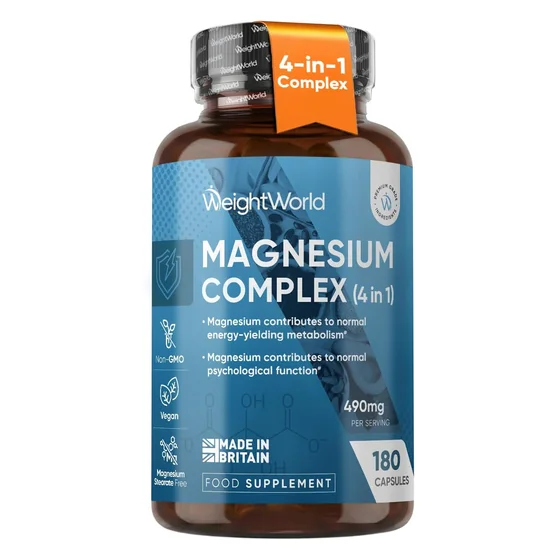 Product optionWeightWorld Magnesium Complex 4-in-1Magnesium capsules for a simple supplement routine.Affiliate link · Price and availability may change.Check on Amazon As an Amazon Associate I earn from qualifying purchases.
Example:
- Week 1: 40 kg for 10, 9 and 8 repetitions
- Week 2: 40 kg for 11, 10 and 9
- Week 3: 40 kg for 12, 11 and 10
- Week 4: 40 kg for 12, 12 and 12
- Week 5: increase the load and return nearer eight repetitions
Real progress will not always happen this neatly. Sleep, stress and shift patterns affect performance. Look for improvement across several weeks.
How far apart should the workouts be?
Leave two or three days between sessions when possible. Monday and Thursday, Tuesday and Friday, or Wednesday and Saturday all work. This gives trained muscles time to recover before you challenge them again.
Back-to-back days are not automatically useless, but they make full-body programming harder. If consecutive days are your only option, use different movements and avoid taking both sessions to maximum fatigue.
Your schedule does not have to be perfectly symmetrical. A rotating shift worker might train Sunday and Wednesday one week, then Tuesday and Saturday the next. Keep a reasonable gap and preserve the two sessions.
How long should each workout take?
Most people can complete this style of session in roughly 60–90 minutes once they know the exercises. If you have less time, reduce low-priority isolation work before removing the main movements.
Rest long enough to perform the next set properly. Heavy leg and compound exercises may need two or three minutes. Smaller isolation work may need around one minute or a little longer. Rushing every rest period can turn strength work into breathlessness practice.
You can pair non-competing exercises, such as a chest press with a leg curl, to save time. I would not superset two demanding exercises if it reduces technique or load too much.
Nutrition for building muscle on two sessions
Training creates the stimulus; food and recovery support the response. Aim for enough protein across normal meals. For many active adults, roughly 1.4–2.0 g per kilogram per day is a useful evidence-based range, although individual needs vary.
You also need enough total energy. If you are constantly dieting aggressively, muscle gain will be slower. Beginners and people returning after a break may build muscle while losing fat, but that should not be treated as guaranteed for everyone.
 Product optionOptimum Nutrition Gold Standard WheyWhey protein powder for a convenient shake.Affiliate link · Price and availability may change.Check on Amazon As an Amazon Associate I earn from qualifying purchases.
A small calorie surplus can help if muscle gain is the main goal, but it should not become an excuse for uncontrolled eating. Body weight rising slowly while performance and measurements improve is more useful than forcing rapid gain.
Recovery matters more when every session is full body
Because both sessions train a lot of muscle, arrive recovered enough to perform. Regular sleep, manageable stress, suitable food and days without hard lifting all matter.
Normal muscle soreness is not the target. If soreness repeatedly lasts until the next session, reduce sets, avoid excessive failure training or choose exercises that create less muscle damage.
A planned easier week can help when performance has fallen, joints feel irritated and normal sessions seem unusually difficult. You do not need a deload every fourth week by rule; use one when the training evidence and your recovery suggest it.
Common mistakes with two-day training
Trying to fit a six-day plan into two workouts
Twenty exercises in one evening is not efficient. Choose the movements that produce the most useful stimulus and remove duplication.
Changing exercises every week
Variation can keep training interesting, but constant changes make progression difficult to measure. Keep the core programme long enough to improve it.
Only training favourite muscles
Two weekly chest-and-arm sessions are not a full-body plan. Legs, back and posterior-chain work still need space.
Using weight at the expense of form
A heavier load is not progress if range of motion shortens and other muscles take over. Standardise your technique before comparing numbers.
Treating missed sessions as failure
If you miss Tuesday, move the workout rather than abandoning the week. A flexible plan should survive normal life.
What I would focus on first
- Choose two training windows you can protect most weeks.
- Use two full-body sessions with five to seven main exercises.
- Record weights and repetitions.
- Finish most sets with one to three good repetitions available.
- Keep the programme for at least eight weeks before judging it.
- Add volume only when recovery is good and progress has stalled.
I would also choose simple exercises that are easy to set up. If half your session is spent waiting for one popular bench, the programme is not practical for your gym.
Frequently asked questions
Is two days per week enough for a beginner?
Yes. Beginners can make strong progress from two well-structured full-body sessions while learning technique and building consistency.
Can advanced lifters build muscle twice a week?
They can, although fitting enough high-quality volume into two sessions becomes more difficult. Exercise selection and fatigue management matter more as training age increases.
Is a full-body workout better than upper/lower twice weekly?
With only two total sessions, full body usually trains each major muscle more often. An upper/lower split trains each area once unless the sessions include some crossover.
Can I train on Saturday and Sunday?
You can if that is your only option, but two consecutive full-body sessions may reduce performance. Consider an upper/lower structure or use different movement patterns on each day.
How quickly will I see muscle growth?
Strength may improve within weeks, but visible muscle growth usually takes longer. Use photographs, measurements and training records over several months.
Do I need supplements?
No supplement replaces training, food and sleep. Protein powder can be convenient and creatine monohydrate can support training performance, but both are optional.
Make the two sessions count
You can build muscle training twice a week, but the sessions need a clear job. Cover the full body, work hard enough, record performance and keep the plan stable long enough for progression to appear.
Your next step is to put two sessions in next week’s diary and choose six reliable exercises for each. Do that consistently before worrying about the programme you might follow if you had unlimited time.
If you want a training and nutrition plan designed around two weekly sessions, your equipment and your actual schedule, that is exactly what I help my SykerFlex coaching clients with.
Sources
- Schoenfeld et al.: resistance-training frequency and muscle hypertrophy
- Resistance-training prescription for strength and hypertrophy
- Weekly resistance-training volume and increases in muscle mass
Training coaching
Turn useful advice into your own programme.
I can structure your sessions around your experience, available equipment, schedule and progress.
About the author
Roland Balogh
I’m an Active IQ Level 3 Personal Trainer, qualified in nutrition for sport and exercise performance. I help people build strength, improve their nutrition and stay consistent—without extreme plans or living in the gym.- Level 3 Personal Trainer
- Sport & Exercise Nutrition
- Mental Health Awareness
Keep reading
Related articles