For most people, four to eight exercises per workout is enough. A beginner doing full-body training may need only four or five. Someone following an upper-body session might use six or seven. The right number depends on the training split, how many sets you perform and how much time you can train with good effort.
 Product optionEFX Kre-Alkalyn Creatine CapsulesCreatine capsules in a convenient format.Affiliate link · Price and availability may change.Check on Amazon As an Amazon Associate I earn from qualifying purchases.
I often see workouts become longer because exercises are added without anything being removed. The session starts with squats, presses and rows, then grows into 12 movements because every video online recommends one more “essential” variation. More choice can feel thorough, but it often creates tired, rushed sets. I would rather see five exercises performed consistently and progressed than 11 completed without a clear purpose.
How many exercises per workout is enough?
A useful starting range is four to eight exercises per workout. Use fewer movements when each one involves several hard sets or trains multiple muscle groups. Use slightly more in a body-part or upper/lower session when some exercises are smaller isolation movements. Quality, weekly volume and progression matter more than the raw exercise count.
The range is broad because a deadlift and a cable curl do not create the same demand. Five large compound movements can be a difficult session. Five small isolation exercises may be much easier to recover from.
Count exercises only after deciding what the workout needs to achieve. The plan should cover important movement patterns and muscles, not chase a particular number.
A practical guide by experience level
Beginners: four to six exercises
A new lifter needs time to learn technique, build confidence and understand effort. Four to six exercises allows enough repetition without overwhelming the session.
A simple full-body workout could include:
- Leg press or squat
- Chest press
- Seated row
- Romanian deadlift or leg curl
- Lat pulldown
- Optional core exercise
That covers a great deal. You do not need three types of curl and four shoulder raises in your first month.
Intermediate lifters: five to eight exercises
As you gain experience, a little more targeted work can be useful. An upper-body day might include two pressing movements, two pulling movements and two or three smaller exercises for shoulders and arms.
The extra exercises should solve a real need. If upper chest development is a goal, an incline press may deserve a place. If triceps already receive enough work and progress well, adding several more variations is not automatically productive.
Advanced lifters: it still depends
Advanced does not mean every workout must contain more. Experienced lifters often use more specialised sessions, but they also generate more fatigue from heavy, well-executed sets. Some of the best advanced sessions are deliberately narrow.
An advanced lifter might perform only four exercises in a hard lower-body session, then use seven in a lighter arm and shoulder workout. The programme, not the label, determines the number.
Choose exercises by movement pattern
For a full-body session, I would normally consider these patterns:
- A knee-dominant movement such as a squat or leg press
- A hip-dominant movement such as a Romanian deadlift or hip thrust
- A horizontal press such as a dumbbell or machine chest press
- A row
- A vertical pull or press where appropriate
- One or two targeted movements for a priority area or core
You do not have to force every pattern into every workout. Across the week, however, the programme should look balanced enough for your goal.
If you use an upper/lower split, the job becomes easier. A lower day might include a squat pattern, hinge, leg curl, calf raise and core movement. An upper day might include two presses, two pulls and one or two arm or shoulder exercises.
Sets matter as much as exercise count
Six exercises performed for two sets each create a different workload from six exercises performed for five sets each. That is why exercise count alone can mislead.
Most beginners can start with two working sets per exercise. More experienced lifters may use two to four, depending on the movement and weekly volume. Warm-up sets prepare you for the work but do not need to be counted as hard training sets.
Research generally supports multiple-set resistance training for strength and hypertrophy, but the useful amount varies. More volume can help up to a point, then returns become smaller while fatigue continues to rise. Your recovery and performance tell you whether the amount is sensible.
How many exercises for muscle growth?
You do not need a separate exercise for every visible part of a muscle. A well-chosen press trains the chest, shoulders and triceps. A row trains the back and biceps. Compound movements let you cover more with fewer exercises.
Isolation work becomes useful when you want more attention on a muscle without adding another demanding compound lift. Lateral raises, leg curls, curls and press-downs are easy to add in small amounts.
For a muscle-building workout, I would usually pick one or two main exercises for the largest target muscles and then add targeted work where it earns its place. If the session is full-body, one exercise per major pattern is often enough because the muscle will be trained again later in the week.
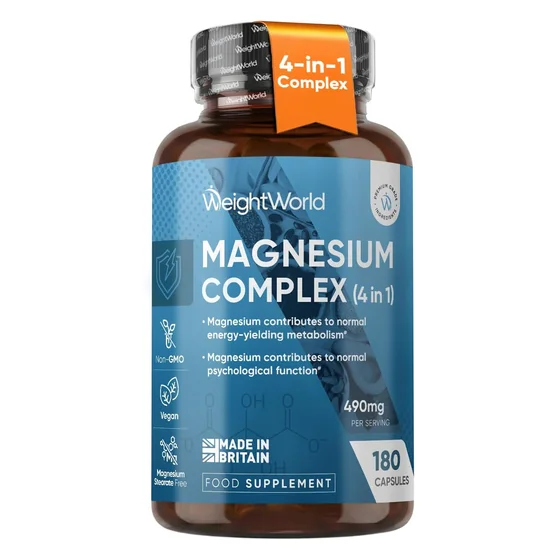 Product optionWeightWorld Magnesium Complex 4-in-1Magnesium capsules for a simple supplement routine.Affiliate link · Price and availability may change.Check on Amazon As an Amazon Associate I earn from qualifying purchases.
How many exercises for strength?
Strength training benefits from practising the main lifts while you are fresh. A session might focus on one primary movement, one related secondary lift and several accessories.
For example, a squat-focused day could include squats, Romanian deadlifts, split squats, leg curls and core work. Five exercises are enough because the first two create substantial demand.
If maximal strength in a specific lift matters, avoid burying it under unnecessary work. More exercises do not improve skill in the main movement when fatigue reduces the quality of practice.
How many exercises if you have only 30 minutes?
Three to five exercises can work very well. Choose movements that cover a lot of muscle, keep equipment close together and limit non-essential phone time.
A 30-minute session might look like this:
- Leg press — 3 working sets
- Dumbbell chest press — 3 sets
- Seated row — 3 sets
- Leg curl — 2 sets
- Lateral raise — 2 sets
You could alternate the last two exercises if the gym allows it. I would not rush heavy compound sets simply to fit more movements. Rest long enough to perform them properly.
When a workout contains too many exercises
The number is probably too high when later exercises are consistently rushed, loads fall sharply, technique becomes careless or sessions regularly exceed the time you can afford.
Another sign is duplication. A flat press, incline press, machine press, cable press and press-up in one normal session may provide more chest work than you can recover from. Two well-chosen pressing movements may do the job better.
Look at what happens in the following sessions too. If your elbows, shoulders or lower back never feel recovered, total workload may be the issue rather than a lack of mobility drills.
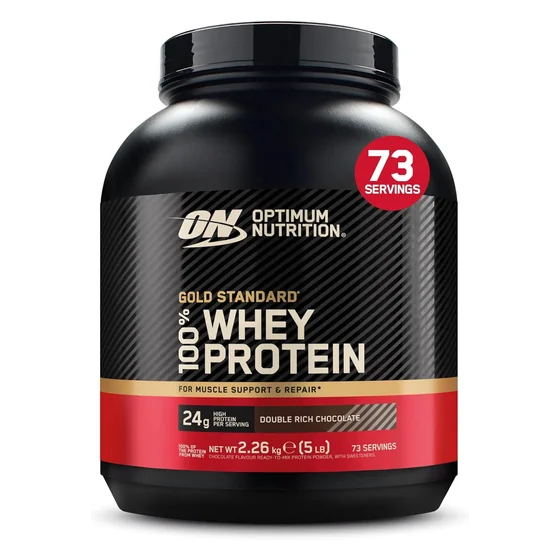 Product optionOptimum Nutrition Gold Standard WheyWhey protein powder for a convenient shake.Affiliate link · Price and availability may change.Check on Amazon As an Amazon Associate I earn from qualifying purchases.
When you might need another exercise
Too little work is possible. If the session contains one chest exercise, one back exercise and nothing for legs across the entire week, it is not a complete general programme.
You may also add an exercise when a clear goal is under-served. A runner who wants stronger calves, a lifter prioritising upper chest or someone rebuilding hamstring strength may need targeted work.
Add one change, then monitor it. If you add four exercises at once and performance improves or pain appears, you will not know which change mattered.
A simple way to build your exercise list
- Write the purpose of the session. Full body, upper body, lower body or a specific focus.
- Choose two or three main movements. These should cover the most important muscles and patterns.
- Add one to three supporting exercises. Use them to fill real gaps.
- Add optional isolation or core work. Keep it only if time and recovery allow.
- Remove duplication. Every exercise should have a reason beyond “I saw it online”.
- Run the plan for several weeks. Judge it through progress, recovery and consistency.
Common programming mistakes
Using a new exercise for the same job
Changing grip or machine does not always create a new training need. Similar movements can be useful, but five versions of the same pattern often add fatigue rather than balance.
Counting warm-ups as the main workload
Warm-up sets should prepare you, not exhaust you. Gradually approach your working load, then count the sets that are genuinely challenging.
Keeping exercises because they feel hard
An awkward exercise is not automatically effective. Choose movements you can control, progress and perform without inappropriate pain.
Adding volume when effort is the problem
If every set stops far from a challenging effort, adding six more exercises may not fix the session. Learn to perform a controlled, productive working set first.
Copying a six-day programme into three days
A workout designed for someone training every day may not suit your week. Use a plan built around your actual frequency.
What I would focus on first
Start with five exercises. Choose three main movements and two supporting ones. Perform two or three working sets of each and record the repetitions and loads.
After four weeks, ask whether an important area is missing or whether the final exercises are consistently poor. Add or remove one movement based on that evidence. The plan should earn complexity gradually.
Frequently asked questions
Is three exercises enough for one workout?
It can be if the session is short and the exercises are well chosen. Three compound movements performed properly can provide useful full-body training.
Are ten exercises too many?
Not always, but ten is more than most people need in a normal session. Check whether exercises duplicate each other or reduce the quality of later sets.
How many exercises should I do for each muscle?
Often one or two per session is enough. The weekly number of challenging sets and training frequency matter more than forcing several variations into one day.
How many exercises should a beginner do?
Four to six is a useful starting range. It gives enough variety to train the whole body while leaving time to learn each movement.
Should I do compound or isolation exercises first?
Usually place the most important demanding compound movements first. Put isolation work later unless a specific rehabilitation or priority reason changes the order.
How often should I change exercises?
Keep effective movements for at least six to eight weeks in most cases. Change them when they no longer suit you, equipment changes or progress has genuinely stalled.
Keep the workout focused
The best number of exercises per workout is the smallest number that covers the session properly and lets you progress. For many people, that means four to eight—not an endless tour of the gym.
Before your next session, write down what each exercise is there to do. If two movements have exactly the same job, keep the one you perform better. If you want a programme designed around your available days, experience and equipment, SykerFlex coaching can take that guesswork out of the process.
Sources and further reading
- Krzysztofik M et al. Maximising muscle hypertrophy: a systematic review of advanced resistance training techniques and methods. International Journal of Environmental Research and Public Health. 2019.
- Schoenfeld BJ et al. Dose-response relationship between weekly resistance training volume and increases in muscle mass: a systematic review and meta-analysis. Journal of Sports Sciences. 2017.
- Currier BS et al. Resistance training prescription for muscle strength and hypertrophy in healthy adults: a systematic review and network meta-analysis. British Journal of Sports Medicine. 2023.
Training coaching
Turn useful advice into your own programme.
I can structure your sessions around your experience, available equipment, schedule and progress.
About the author
Roland Balogh
I’m an Active IQ Level 3 Personal Trainer, qualified in nutrition for sport and exercise performance. I help people build strength, improve their nutrition and stay consistent—without extreme plans or living in the gym.- Level 3 Personal Trainer
- Sport & Exercise Nutrition
- Mental Health Awareness
Keep reading
Related articles