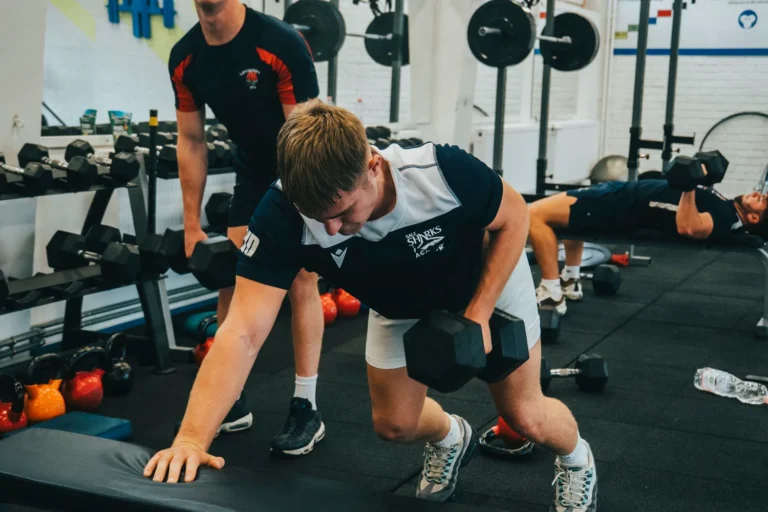
A deload week is a short period when you deliberately reduce training stress. You might use lighter weights, complete fewer sets, stop further from failure or combine all three. The aim is to let fatigue settle while keeping the habit and movement patterns in place.
 Product optionEFX Kre-Alkalyn Creatine CapsulesCreatine capsules in a convenient format.Affiliate link · Price and availability may change.Check on Amazon As an Amazon Associate I earn from qualifying purchases.
You do not need to earn a deload by destroying yourself first. At the same time, you do not need one every fourth week simply because somebody online follows that schedule. I prefer to look at your programme, experience, sleep, joint comfort and performance. A sensible deload should leave you ready to train productively again, not make you feel as though you have been punished with a week of pointless workouts.
What is a deload week?
A deload week is usually five to ten days of intentionally easier training. You continue exercising but reduce the amount of work your body must recover from. Common methods include cutting the load by 10–30%, performing roughly half the usual sets, and keeping more repetitions in reserve.
There is no single scientific formula that suits everyone. The concept comes from managing accumulated fatigue so that fitness can show through. Strength athletes may use planned reductions before competition, while normal gym-goers can use a simpler version when a hard block ends or recovery is slipping.
Fitness and fatigue can rise together
Training gives your body a reason to adapt, but it also creates fatigue. When the programme is appropriate, recovery allows strength and fitness to improve. When stress accumulates faster than you recover, performance can temporarily stall or fall.
This does not mean every difficult workout is a problem. Some sessions feel heavy because you slept poorly, trained at a different time or had a demanding day. I would look for a pattern across several workouts rather than reacting to one disappointing set.
A deload reduces fatigue; it does not create new fitness by itself. Think of it as making space for the training you have already completed to be useful.
Signs you may benefit from a deload
- Loads that are normally manageable feel unusually heavy for several sessions
- Repetitions fall across multiple exercises without an obvious reason
- Normal muscle soreness lasts longer than usual
- Small joint aches are becoming more noticeable
- You feel mentally flat before every workout
- Sleep is poorer and your usual recovery routine is not helping
- Your technique is becoming less consistent at normal loads
None of these signs proves that training fatigue is the cause. Illness, low calorie intake, life stress, medication and medical conditions can produce similar changes. If tiredness is persistent, severe or accompanied by concerning symptoms, speak to a healthcare professional.
Who is most likely to need planned deloads?
People training hard with high volume, heavy loads and several weekly sessions are more likely to accumulate fatigue. Advanced lifters often produce more force and can create a larger recovery demand from each working set.
Someone training twice a week with moderate effort may deload naturally through holidays, busy work periods and occasional missed sessions. A beginner who is still learning and keeping several repetitions in reserve may not need a formal deload for months.
Your life matters too. A programme that is manageable during a quiet month may become too demanding when overtime, poor sleep or family responsibilities increase. Recovery capacity is not fixed.
Three simple ways to deload
Option 1: Reduce the number of sets
Keep familiar exercises and similar weights, but perform around half your normal working sets. If you usually do four sets, do two. Stop each set well before failure.
This suits people who want to keep the normal feeling of the movement without spending as long in the gym.
Option 2: Reduce the load
Keep the exercises and number of sets, but use roughly 70–85% of your normal working weight. Perform smooth repetitions and finish with plenty left in reserve.
This can be useful when joints feel beaten up or heavy loads have become mentally tiring.
Option 3: Reduce both
Use lighter weights and fewer sets. This creates the largest reduction in training stress and suits the end of a demanding block or a week when life stress is particularly high.
You can also remove the most fatiguing exercises temporarily. A machine movement may replace a barbell variation, provided the session remains easy rather than becoming a different hard workout.
A sample deload week
Imagine your normal upper-body workout includes:
- Incline dumbbell press — 3 sets of 8
- Lat pulldown — 3 sets of 10
- Chest-supported row — 3 sets of 10
- Shoulder press — 3 sets of 8
- Lateral raise — 3 sets of 15
- Curl and press-down — 3 sets each
During the deload, you could use around 80% of the usual load and perform two sets of each main movement. Complete one or two easy sets for the smaller exercises, or leave them out. Nothing should become a grind.
The session may finish in 35 minutes. That is fine. A deload is not supposed to recreate the same fatigue through a more creative route.
Should you train to failure during a deload?
No. Training to failure defeats much of the purpose. Leave at least three or four good repetitions in reserve, and more is acceptable.
The lighter effort can feel strange if you normally judge training by exhaustion. Use the week to practise smooth technique, consistent setup and controlled repetitions. You are maintaining familiarity rather than testing limits.
 Product optionWeightWorld Magnesium Complex 4-in-1Magnesium capsules for a simple supplement routine.Affiliate link · Price and availability may change.Check on Amazon As an Amazon Associate I earn from qualifying purchases.
If a set accidentally becomes harder than planned, it is not a disaster. Adjust the next one rather than turning the whole session back into normal training.
Can you take the whole week off instead?
Yes. A complete break can be appropriate when you are ill, travelling, mentally exhausted or dealing with an injury that needs assessment. One week away from lifting will not erase months of progress.
Some people feel better keeping the routine, and a deload makes returning to normal training smoother. Others benefit from not entering the gym for several days. The best choice depends on why you need the break.
If an exercise causes sharp or worsening pain, a deload is not a substitute for diagnosis. Stop aggravating it and seek help from a suitable medical or rehabilitation professional.
Will you lose muscle during a deload?
A normal one-week deload is very unlikely to cause meaningful muscle loss. Detraining changes occur over longer periods, and you are still providing some movement and resistance if you continue training.
You may feel less “full” if carbohydrate intake changes or muscle soreness and swelling fall. That visual difference is not the same as losing tissue.
Keep eating normally for your goal, include appropriate protein and use the easier week to sleep where possible. There is no need to cut food aggressively because training volume is temporarily lower.
How often should you deload?
Some programmes schedule a deload every four to eight weeks. This can work when training blocks are deliberately hard and progression is planned. Other people respond better to deloading when clear signs appear.
I would not schedule frequent deloads to compensate for an unnecessarily punishing programme. If you need an easy week every third week, the normal weeks may contain too much work.
For many recreational lifters, reviewing every six to ten weeks is reasonable. Ask whether performance, joint comfort and motivation remain stable. Your training log makes that decision more objective.
 Product optionOptimum Nutrition Gold Standard WheyWhey protein powder for a convenient shake.Affiliate link · Price and availability may change.Check on Amazon As an Amazon Associate I earn from qualifying purchases.
What to do after the deload
Return to normal training without immediately testing every personal best. You can resume the previous working loads but leave an extra repetition in reserve during the first session.
If you feel better and performance returns, continue the programme. If the same fatigue reappears within a week, examine the plan. The issue may be excessive weekly volume, poor exercise selection, an aggressive calorie deficit or inadequate sleep.
A deload should not become a loop in which you recover from a plan that never fits.
Common deload mistakes
Replacing lifting with hard cardio
Running intervals every day still creates fatigue. Keep additional activity comfortable if recovery is the aim.
Testing maximum strength
A deload is not a testing week. Save heavy singles and rep records for when fatigue has settled.
Changing every exercise
New movements can create unfamiliar soreness. Familiar exercises performed easily are usually more predictable.
Feeling guilty because the workout was easy
The easy feeling is intentional. Progress comes from the balance between stimulus and recovery, not from proving toughness every session.
Using a deload to ignore pain
If pain returns as soon as normal training resumes, the exercise, technique, load or underlying issue needs attention.
What I would focus on first
Look at your last three workouts. If several main lifts are falling, joints feel irritated and motivation is unusually low, take a lighter week. Keep the same days but halve the working sets and stop every set comfortably short of failure.
Use the spare time to sleep, prepare normal meals and review the next training block. Recovery does not need to become another complicated project.
Frequently asked questions
How long should a deload last?
Most deloads last around five to ten days. One normal training week is a simple choice for recreational lifters.
Should beginners deload?
They can, but many beginners do not need scheduled deloads because their loads and volumes are still moderate. An easier week is sensible when fatigue accumulates.
Can I do cardio during a deload?
Yes, but keep it comfortable. Hard intervals or a sudden large increase in running can replace the fatigue you were trying to reduce.
Should I eat fewer calories during a deload?
Usually there is no need for a dramatic change. Continue eating for your goal, keep protein appropriate and adjust only if your wider plan requires it.
Is a deload the same as a rest week?
Not exactly. A deload normally includes easier training, while a rest week may contain no formal training at all. Both can be useful.
What if I still feel tired after a deload?
Review sleep, food, life stress and programme volume. Persistent or unexplained fatigue should be discussed with a healthcare professional.
Use the lighter week properly
A deload is not lost training. It is a planned reduction that can help you return with better energy, steadier technique and fewer small aches. Keep it genuinely easy and pay attention to what improves.
If you repeatedly feel worn down by your programme, the answer may be better programming rather than more willpower. SykerFlex coaching can help organise training stress and progression around the recovery you actually have available.
Sources and further reading
- Bosquet L et al. Effects of tapering on performance: a meta-analysis. Medicine & Science in Sports & Exercise. 2007.
- Pritchard H et al. Tapering practices of strength athletes. Journal of Strength and Conditioning Research. 2016.
- American College of Sports Medicine. Progression models in resistance training for healthy adults.
Online coaching
Build a plan that fits your real life.
Get personalised training, practical nutrition guidance and clear accountability from me each month.
About the author
Roland Balogh
I’m an Active IQ Level 3 Personal Trainer, qualified in nutrition for sport and exercise performance. I help people build strength, improve their nutrition and stay consistent—without extreme plans or living in the gym.- Level 3 Personal Trainer
- Sport & Exercise Nutrition
- Mental Health Awareness
Keep reading
Related articles