If you can only get to the gym twice a week, you may feel as though you need a five-day plan before your training “counts”. I would start with the two days you can actually protect. A Tuesday evening and a Saturday morning, for example, give you more to work with than a complicated programme you abandon after a fortnight.
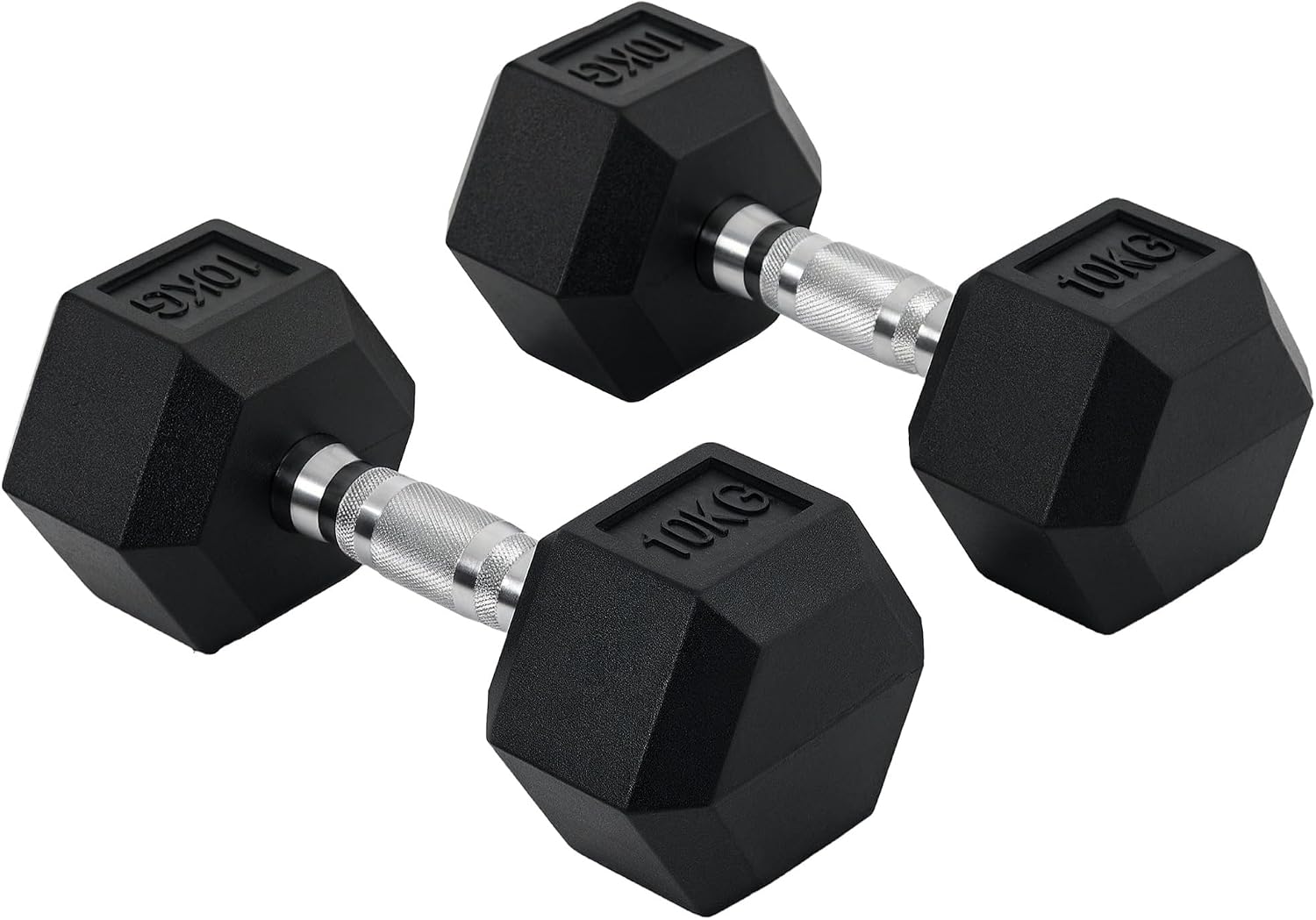 Roland’s practical pickHOMCOM Dumbbell Hexagonal Dumbbells ExerciseSee product details and current availability on Amazon.Affiliate link · Price and availability may change.Check on Amazon As an Amazon Associate I earn from qualifying purchases.
Training twice a week can support strength, fitness and muscle growth, especially if both sessions cover your whole body and you gradually make the work more challenging. I’ll show you the plan I would start with, how to fit it around an unpredictable week, and what to change when time or energy is tight. You do not need to turn each visit into a marathon.
Can you make progress training twice a week?
Yes. For general health, the NHS recommends strengthening activity for all major muscle groups on at least two days each week. The American College of Sports Medicine also puts consistent work for the major muscle groups ahead of chasing a perfect, complicated routine. Those guidelines are a useful starting point; your result will still depend on your starting point, effort, recovery and how consistently you train.
When I help someone plan around two gym visits, I prioritise a squat or leg press pattern, a hip hinge, an upper-body push, an upper-body pull and a little core work. That gives each session a clear job. The exact exercises can change to suit your joints, equipment and experience.
A common mistake is to split two days into “chest and arms” and “back and legs”, then miss one session. Suddenly half the body gets no work that week. Two full-body sessions give you a more reliable base, even when work or family plans move around.
A two-day full-body gym plan you can actually use
Leave a day or two between sessions when possible. Monday and Thursday or Tuesday and Saturday are easy examples, but the names of the days do not matter. Start each session with five minutes of easy movement and a couple of lighter practice sets for your first main exercise. Choose loads you can control with good form and stop when you feel you could manage roughly another one or two clean repetitions.
These are starting sets, not a test you have to pass. If you are new or returning after a break, begin with one or two sets per exercise and add more only when you are recovering well. Allow roughly 45–60 minutes including your warm-up; a shorter session is useful too.
Day A: Squat, push and pull
- Leg press or goblet squat — 2 sets of 8–12 repetitions.
- Dumbbell bench press or chest press machine — 2 sets of 8–12.
- Seated cable row or chest-supported row — 2 sets of 8–12.
- Romanian deadlift with dumbbells — 2 sets of 8–10.
- Plank or dead bug — 2 controlled sets.
The leg press is fine if a squat feels awkward. A chest-supported row can be easier to set up than a bent-over row when you are tired after work. What matters most here is doing a manageable amount of work that you can repeat next week.
Day B: Hinge, pull and push
- Hip thrust or another comfortable hip hinge — 2 sets of 8–12.
- Lat pulldown or assisted pull-up — 2 sets of 8–12.
- Dumbbell shoulder press or incline chest press — 2 sets of 8–12.
- Split squat, step-up or leg extension — 2 sets of 8–12 per side where relevant.
- Side plank or cable anti-rotation press — 2 controlled sets per side.
You do not have to choose the same equipment forever. If your gym’s cable station is busy, a row machine is a sensible swap. If an exercise causes pain rather than normal effort, stop and choose an alternative; do not try to push through it for the sake of completing a list.
How to make each session fit into 30 minutes
Do the first three exercises on the day’s list and keep your warm-up brief but purposeful. Rest enough to perform the next set well; for many people that means around one to two minutes, and sometimes longer after a hard leg set. Save the final exercise or a few minutes of core work for days when you have more time.
I usually tell clients to decide their minimum session before they arrive. If the day goes badly, three useful movements still count. This avoids standing in the gym trying to redesign your entire programme because you only have half an hour.
How to progress without adding extra gym days
Keep a simple note of the exercise, weight and repetitions. Suppose you use the chest press for two sets of 8–12. If you manage 10 and 9 controlled reps this week, aim to improve a little over the next few sessions. Once you reach the top of the range with sound technique, try the next small weight increase and build up again.
That is one practical way to make training gradually harder. You can also improve by moving with more control, using a comfortable range of motion or adding a set when your schedule and recovery allow. I would change one thing at a time, rather than increasing every weight because the calendar says it is a new week.
If you miss a day, do the next planned session when you can. You do not have to “make up” every set in one punishing workout. A Wednesday and Sunday week can still work; a one-session week is a temporary change, not a reason to restart from zero.
What about walking, cardio and food?
Two lifting days do not have to carry every part of your fitness routine. Walking, cycling to work or another activity you enjoy can sit around them. The NHS also gives separate guidance for aerobic activity, so think about movement across the week rather than expecting two gym visits to cover it all.
For food, I would start with regular meals that include a source of protein, fruit or vegetables, and enough overall energy to support your goal. If you want to build muscle, you need enough food to recover; if you are trying to lose body fat, a realistic calorie deficit matters more than a particular workout split. You do not need an expensive supplement or a strict “clean eating” plan to make two sessions worthwhile.
Sleep and your workload affect what is realistic. A parent who trained after a broken night or someone finishing a long shift may need a lighter session. Adjust the load or the number of sets and keep the routine moving. Consistency over several months tells you more than one unusually strong or weak workout.
Common mistakes I see with two-day training plans
The first is trying to squeeze a five-day bodybuilding split into two sessions. It often becomes a long list of small exercises, with the big movement patterns squeezed out or rushed. I would rather see a shorter plan with a few exercises done properly.
The second is changing the plan every week. If your movements always change, it is harder to tell whether you are improving. Keep your main exercises for several weeks, then adjust a movement if it is uncomfortable, inaccessible or no longer useful for your goal.
The third is treating every set as a maximum-effort test. You can train hard without lifting until your technique breaks down. Good repetitions and enough recovery make the next session easier to show up for.
Finally, do not judge two-day training by what someone with five free mornings does. Your plan should reflect your available time. Two sessions are a workable starting point, and you can add a third later if it suits your life and goal.
What I would focus on first
I would put two repeatable appointments in your calendar, choose the Day A and Day B exercise versions you can do comfortably, and record your first two weeks. Keep the sessions short enough that you can return the following week. Then look for small improvements in control, repetitions or weight.
If you have an injury, a medical condition, are pregnant, or have symptoms that exercise worsens, speak to an appropriate health professional for advice tailored to you. If you are unsure about an exercise, a qualified coach can help you find a suitable version and check your technique.
Frequently asked questions about training twice a week
Is training twice a week enough to build muscle?
It can be, particularly if you are starting out or coming back to training. Cover your main muscle groups, gradually increase the challenge and eat enough to support your goal. More training may help some people, but two well-planned days are a practical base.
Should I do full body or upper/lower workouts twice a week?
I would usually choose full body for two days. Each session then covers legs and upper body, so a missed visit does not leave an entire area untouched for a week. An upper/lower split can work if you prefer it, but it gives each area fewer opportunities in a typical two-day week.
How long should I rest between the two sessions?
A day or two between full-body sessions is a sensible starting point. If your timetable forces two consecutive days, you can still train, but consider lighter work or different exercise emphasis on the second day and pay attention to recovery.
Can I lose weight by going to the gym twice a week?
Two gym sessions can support strength and help you stay active. Weight change depends on your overall eating habits and activity over time, so I would look at the full week rather than expect two workouts to do everything.
What if I only have 30 minutes per workout?
Warm up, then choose three main movements: a lower-body exercise, a push and a pull. Keep a short record so you can build on them next time. A focused half-hour you repeat is more useful than an elaborate plan you cannot fit in.
The takeaway
Training twice a week works best when both sessions are simple enough to repeat and substantial enough to cover your whole body. Pick two days, try Day A and Day B for the next two weeks, and write down what you did. That gives you a real starting point to improve from.
If you want a training plan built around your schedule, experience and nutrition, that is the kind of practical structure I help my SykerFlex coaching clients put together.
Sources
- NHS, Physical activity guidelines for adults aged 19 to 64: https://www.nhs.uk/live-well/exercise/physical-activity-guidelines-for-adults-aged-19-to-64/
- American College of Sports Medicine, Resistance training guidelines update (2026): https://acsm.org/resistance-training-guidelines-update-2026/
Training coaching
Turn useful advice into your own programme.
I can structure your sessions around your experience, available equipment, schedule and progress.
About the author
Roland Balogh
I’m a certified Personal Trainer and Nutritionist helping people build strength, improve their nutrition and stay consistent—without extreme plans or living in the gym.- Certified Personal Trainer
- Qualified Nutritionist
- Online Fitness Coach
Keep reading