If you live in the UK, vitamin D is one supplement worth understanding rather than buying at random. During autumn and winter, sunlight is not strong enough for most people to make reliable amounts through their skin. Food provides some, but there are relatively few rich sources.
 Product optionEFX Kre-Alkalyn Creatine CapsulesCreatine capsules in a convenient format.Affiliate link · Price and availability may change.Check on Amazon As an Amazon Associate I earn from qualifying purchases.
The NHS advises that adults and children over four should consider taking a daily supplement containing 10 micrograms of vitamin D during autumn and winter. Some people are advised to take that amount all year. I will explain who that includes, how to read the label and why taking a very large dose “just in case” is not the sensible option.
Should you take vitamin D in autumn and winter in the UK?
UK guidance says adults and children over four should consider taking 10 micrograms of vitamin D each day during autumn and winter. This is because the sun is not strong enough for the body to make enough vitamin D reliably. People at higher risk of deficiency may be advised to supplement throughout the year.
Ten micrograms is the same as 400 international units, usually written as 400 IU. A label may use either measurement, so knowing both avoids confusion.
This general guidance is not the same as treating a diagnosed deficiency. If a blood test shows that you are deficient, a clinician may recommend a different dose for a defined period.
What does vitamin D do?
Vitamin D helps regulate calcium and phosphate, which are needed for healthy bones, teeth and muscles. Severe deficiency can lead to bone problems such as osteomalacia in adults and rickets in children.
Vitamin D is often marketed with a long list of extra promises. I would keep expectations grounded. Correcting low vitamin D is important for health, but a supplement is not a guaranteed fix for tiredness, low mood, poor gym performance or frequent illness.
Those symptoms can have many causes. If you feel persistently unwell or unusually tired, speak to a GP rather than assuming a vitamin is the whole answer.
Why autumn and winter are different
Your skin can make vitamin D when it is exposed to ultraviolet B radiation from sunlight. In the UK, the angle and intensity of the sun between roughly October and early March mean this process is limited.
You may still enjoy walking outside in winter, and daylight remains useful for activity, mood and sleep routines. It simply should not be treated as a reliable vitamin D strategy during these months.
Sunbeds are not a safe alternative. They increase the risk of skin cancer and should not be used to make vitamin D.
Can summer vitamin D last through winter?
Your body can store some vitamin D, so the amount you build during sunnier months may contribute later. That does not make it easy to predict whether an individual will maintain an adequate level throughout winter. Time outdoors, skin tone, age, clothing, diet and health can all affect the picture.
I would not try to “load up” by deliberately burning in summer. Skin damage is not a sensible vitamin strategy. Follow sun-safety guidance when ultraviolet levels are high, and use the simple seasonal supplement recommendation rather than chasing long periods of unprotected exposure.
Sunlight through a closed window does not provide the same vitamin D-producing UVB exposure. A bright room may help you feel awake, but sitting beside the window is not a replacement for the autumn and winter guidance.
Who should consider vitamin D all year?
The NHS advises year-round supplementation for adults and children over four who may have very little sunshine exposure. That includes people who are often indoors, such as those who are frail or housebound, people living in a care home and people who usually cover most of their skin outdoors.
People with dark skin, including those with an African, African-Caribbean or South Asian background, may not make enough vitamin D from sunlight and should consider a daily 10 microgram supplement throughout the year.
Individual needs can also be affected by health conditions, pregnancy, medication and problems absorbing nutrients. Ask a pharmacist, GP or registered dietitian when your situation is not straightforward.
Food sources of vitamin D
Food can contribute, although getting enough from diet alone can be difficult. Sources include:
- Oily fish such as salmon, sardines, herring and mackerel
- Egg yolks
- Red meat and liver
- Foods fortified with vitamin D, which may include some cereals, spreads and plant drinks
- Infant formula, which is fortified
Check labels because fortification varies. A plant drink looking similar to milk does not guarantee that it contains the same nutrients.
Liver is not suitable during pregnancy because it contains high amounts of vitamin A. Pregnancy-specific advice should come from the NHS or your maternity team.
Vitamin D2 or D3: does the type matter?
Supplements commonly contain vitamin D2, called ergocalciferol, or vitamin D3, called cholecalciferol. Both can raise vitamin D status, although D3 may be more effective at maintaining levels in some circumstances.
Vitamin D3 is often made from lanolin from sheep’s wool. Vegan D3 made from lichen is available, and D2 is generally suitable for vegans. Check the product rather than assuming.
 Product optionWeightWorld Magnesium Complex 4-in-1Magnesium capsules for a simple supplement routine.Affiliate link · Price and availability may change.Check on Amazon As an Amazon Associate I earn from qualifying purchases.
For a normal seasonal supplement, I would prioritise the correct dose, a reputable manufacturer and a product you can take consistently. An expensive delivery system is not automatically necessary.
How to read the supplement label
- Find the amount per dose. Look for 10 micrograms or 400 IU, not only the strength advertised on the front.
- Check the serving size. The stated amount may refer to one tablet, several drops or multiple gummies.
- Look for duplicate vitamin D. A multivitamin, cod liver oil and separate vitamin D product can overlap.
- Check the ingredients. Consider allergens, gelatine and whether the product suits a vegan diet if relevant.
- Follow storage instructions. Drops and sprays still need to be stored and measured correctly.
Gummies can be convenient, but they are still supplements. Keep them away from children and do not treat them like sweets.
Can you take too much vitamin D?
Yes. Vitamin D is fat-soluble, which means excessive amounts can build up. Taking too much over a long period can cause too much calcium in the blood, potentially affecting bones, kidneys and the heart.
The NHS advises not taking more than 100 micrograms, or 4,000 IU, of vitamin D a day for most adults unless a clinician has given different instructions. Lower limits apply to children depending on age.
Do not copy a high-dose protocol from social media or use a deficiency treatment dose indefinitely. More is not better once the need is met.
Should you get a vitamin D blood test?
Routine testing is not necessary for everyone who follows seasonal guidance. A clinician may arrange a test when symptoms, risk factors, bone health, medication or another condition make deficiency more likely.
If you think you are deficient, speak to a GP or pharmacist. Do not use a private result in isolation to prescribe yourself a very high dose. The result should be interpreted alongside your health and symptoms.
Persistent muscle weakness, bone pain or unexplained fatigue deserves proper assessment because vitamin D is only one possible factor.
Does vitamin D improve gym performance?
If you are deficient, correcting that deficiency may support normal muscle function and health. That does not mean taking extra vitamin D above what you need will act like a pre-workout or directly build muscle.
I would not sell vitamin D as a performance supplement. Training quality, programme design, protein, total food intake and sleep have a more direct role in progress for most gym-goers.
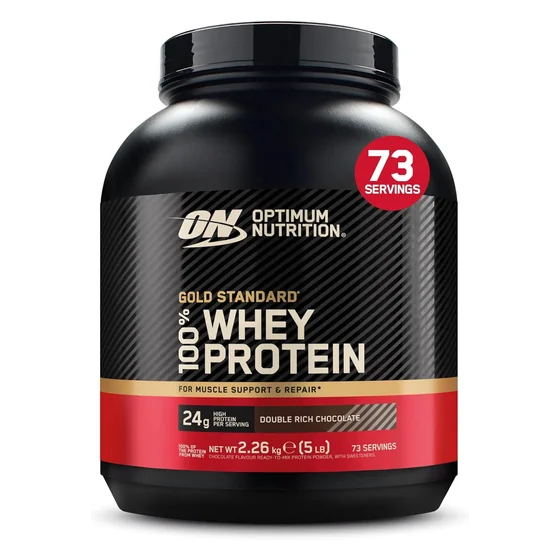 Product optionOptimum Nutrition Gold Standard WheyWhey protein powder for a convenient shake.Affiliate link · Price and availability may change.Check on Amazon As an Amazon Associate I earn from qualifying purchases.
Use vitamin D because it is appropriate for health and seasonal guidance, not because a label promises a bigger bench press.
What about vitamin D with calcium, magnesium or vitamin K?
Combination products are heavily marketed. You do not automatically need several supplements because you take vitamin D. Calcium can often be obtained through a balanced diet, and magnesium needs depend on the wider intake and health situation.
Vitamin K is involved in normal blood clotting and bone health, but adding high-dose vitamin K is not a universal requirement. It can interact with anticoagulant medicines such as warfarin.
Keep the plan simple unless a healthcare professional has identified another need. Buying a long list of nutrients can create duplication and interactions without improving the outcome.
Common mistakes with vitamin D
Confusing micrograms and milligrams
A milligram is 1,000 micrograms. Vitamin D doses are normally listed in micrograms or IU. Read the unit carefully.
Taking several products at once
Check multivitamins, cod liver oil and specialist supplements. The total daily amount is what matters.
Assuming tiredness proves a deficiency
Tiredness is non-specific. Sleep loss, anaemia, thyroid problems, stress and many other factors can cause it. Seek advice when it persists.
Using the highest dose available
The strongest product is not the best default. Follow UK guidance or the dose prescribed for you.
Forgetting that advice differs by age
Babies and young children have specific guidance. Parents should check the NHS recommendation and account for fortified formula.
What I would focus on first
If you are a generally healthy UK adult, check whether your current multivitamin already contains vitamin D. If it does not, consider a straightforward product providing 10 micrograms daily during autumn and winter.
If you are rarely outdoors, have dark skin, cover most of your skin, have a condition affecting absorption or take regular medication, ask a pharmacist or GP whether year-round use or individual advice is appropriate.
Frequently asked questions
What months should I take vitamin D in the UK?
The NHS recommends considering it during autumn and winter, commonly understood as October to early March. Higher-risk groups may need it all year.
How much vitamin D should an adult take?
General UK guidance is 10 micrograms, or 400 IU, daily during autumn and winter. A clinician may prescribe differently for a diagnosed deficiency.
Should I take vitamin D with food?
Vitamin D is fat-soluble, so taking it with a normal meal containing some fat is practical. Follow the specific product instructions.
Can I get enough vitamin D from food?
Some people obtain useful amounts, but food sources are limited. That is why UK seasonal supplementation guidance exists.
Does vitamin D help with tiredness?
Correcting a deficiency may help symptoms related to that deficiency, but tiredness has many causes. Do not assume vitamin D will fix persistent fatigue.
Can I take vitamin D with other supplements?
Often yes, but check for duplicate vitamin D and possible medicine interactions. A pharmacist can review your combination.
A sensible seasonal habit
Vitamin D does not need a complicated supplement stack. For many UK adults, the practical step is simply considering 10 micrograms daily through autumn and winter and avoiding unnecessarily high doses.
Check the back of the label today rather than relying on the marketing on the front. If you want help separating useful nutrition habits from expensive extras, that evidence-led, practical approach is part of SykerFlex coaching.
Sources and further reading
- NHS. Vitamin D — vitamins and minerals.
- UK Government and Department of Health and Social Care. Vitamin D supplementation guidance.
- Scientific Advisory Committee on Nutrition. Vitamin D and health report.
Personalised coaching
Build the plan before chasing supplements.
I can help you organise your training, everyday nutrition and recovery so every product has a clear purpose.
About the author
Roland Balogh
I’m an Active IQ Level 3 Personal Trainer, qualified in nutrition for sport and exercise performance. I help people build strength, improve their nutrition and stay consistent—without extreme plans or living in the gym.- Level 3 Personal Trainer
- Sport & Exercise Nutrition
- Mental Health Awareness
Keep reading
Related articles